Anyone who’s worked on a commercial project knows this: flooring decisions look simple until they fail.
At first, everything seems fine. The space opens, it looks great in photos, and then real life kicks in. Foot traffic increases. Cleaning becomes aggressive. Furniture moves. Weather gets involved. That’s when weak flooring choices start showing up.
So when people ask how to choose the right flooring for high-traffic areas, the honest answer is this: you’re not choosing for today — you’re choosing for wear, abuse, and time.
High-Traffic Areas Don’t Behave Like Showrooms
Rooftop restaurants, hotel entrances, pool decks, public walkways — these spaces don’t get a break. They deal with:
- Constant foot movement, not occasional use
- Regular washing and chemical cleaners
- Heat, humidity, UV exposure, and water
- Safety expectations that leave no room for error
When flooring isn’t designed for these conditions, problems don’t take years to appear. Sometimes they show up within months.
Start With Practical Questions (Not Materials)
One mistake that keeps repeating across projects is starting with the product instead of the problem.
Before looking at finishes or colors, ask:
- What will this surface look like after thousands of people walk on it?
- How much maintenance can the operation realistically handle?
- Is this area wet more often than drawings suggest?
- What happens if one section fails — can it be repaired easily?
These questions tend to push decision-makers toward low-maintenance, commercial-grade flooring, even if the upfront cost looks higher.
Flooring Options That Actually Work in High-Traffic Spaces
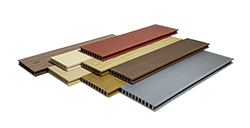
WPC Decking: The Practical Favorite
WPC Decking is one of the smartest answers when people ask how to select the best flooring for high-traffic areas.
Why professionals trust it:
- Handles moisture, heat, and foot traffic with ease
- Slip-resistant, making it safer for guests and staff
- Doesn’t need sanding, sealing, or repainting
- Keeps a consistent appearance over time
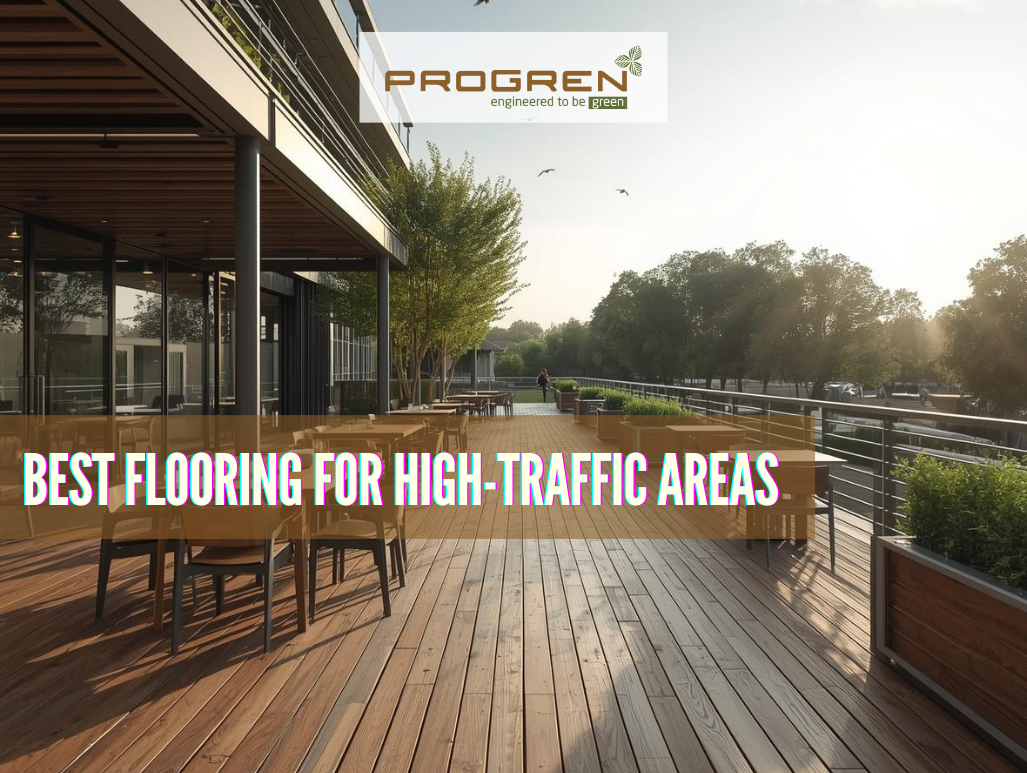
It’s especially popular for rooftop restaurants, hotel terraces, and busy outdoor dining areas where downtime simply isn’t an option.
Outdoor Wooden Flooring: Luxury With Responsibility
Outdoor Wooden Flooring still has a place—especially in high-end hospitality—but only when chosen wisely.
Best used when:
- You want a natural, premium look
- The area is partially covered or controlled
- Proper treatment and maintenance are planned
Thermally modified or engineered wood performs far better than untreated timber and can still work in high-traffic settings when expectations are realistic.
Swimming Pool Decking: Safety Comes First
Poolside flooring isn’t just about looks. Swimming Pool Decking must feel comfortable underfoot and remain safe even when wet.
Key things to prioritize:
- Strong slip resistance
- Resistance to chlorine and moisture
- Surfaces that don’t overheat in the sun
This is why composite and WPC systems are increasingly replacing traditional materials around pools.
Porcelain & Stone: Built for Urban Intensity
For plazas, promenades, and public-facing projects, porcelain and stone pavers offer long-term durability. They’re tough, clean-looking, and highly resistant—but they do require proper installation and structural planning.
Reality Check Comparison
|
Material |
Maintenance | Typical Lifespan |
Where It Works Best |
|
WPC Decking |
Very low | 20–25 years | Rooftops, terraces, pool decks |
|
Outdoor Wood |
Moderate | 10–15 years |
Luxury hospitality |
|
Porcelain |
Low | 25+ years |
Urban and civic areas |
| Natural Stone | Moderate | 20+ years |
Public plazas |
This kind of comparison helps decision-makers confidently choose low maintenance flooring options for high usage areas.
Trends Shaping Flooring Choices Right Now
In 2026, high-traffic flooring is moving toward:
- Heat-reflective surfaces for outdoor comfort
- Recycled composite materials for sustainability goals
- Modular systems that install faster and reduce downtime
- Fire-rated decking for hospitality compliance
Staying aware of these trends makes it easier to decide how to select the best flooring for high-traffic areas with future-proof thinking.
Why Many Professionals Choose Progren Flooring?
Progren Flooring has become a trusted name for projects where performance matters as much as appearance.
What decision-makers appreciate:
- Flooring designed for harsh outdoor and high-footfall conditions
- Slip-resistant and UV-stable materials
- Finishes that suit premium hospitality and urban design
- Proven low maintenance flooring options for high usage areas that lower long-term costs
Planning Beyond the Flooring Itself
Flooring doesn’t exist in isolation. On larger projects, it’s often coordinated alongside external teams Landscape Contractors in Dubai, ensuring smooth transitions between built and outdoor environments.
Practical Maintenance Tips for High-Traffic Flooring (By Progren Flooring)
Even the most durable flooring performs best when supported by smart maintenance practices. Based on real-world commercial projects, Progren Flooring recommends the following:
- Maintain a consistent cleaning routine
Regular sweeping and washing prevent grit from wearing down surfaces. - Use non-abrasive cleaning products
Harsh chemicals can damage protective layers and affect slip resistance. - Clean spills and standing water promptly
Quick action helps preserve surface integrity and appearance. - Inspect high-use zones regularly
Entry points and service paths should be checked for early signs of wear. - Protect flooring during events or renovations
Temporary covers reduce the risk of surface damage from equipment and furniture movement.
On large commercial sites, these maintenance routines are often coordinated alongside external teams such as Landscape Contractors in Dubai, ensuring that flooring performance is maintained consistently across interconnected indoor and outdoor areas.
Following these steps helps extend flooring lifespan and ensures reliable long-term performance—reinforcing the value of choosing engineered solutions from Progren Flooring.
Common Mistakes to Avoid
- Choosing residential-grade materials for commercial use
- Ignoring drainage and substructure requirements
- Focusing only on upfront cost
- Underestimating maintenance and downtime
Avoiding these mistakes is a major step in mastering how to select the best flooring for high-traffic areas.
FAQs
What is the most durable flooring for high-traffic commercial areas?
WPC and composite decking offer superior durability, moisture resistance, and minimal maintenance.
Are low maintenance flooring options suitable for luxury hospitality?
Yes. Modern composite systems replicate natural textures while outperforming traditional materials.
How does flooring choice affect operational costs?
Low-maintenance materials significantly reduce cleaning, repair, and downtime expenses.
Is outdoor flooring safe for wet or poolside environments?
Yes—when slip-resistance ratings and drainage design are properly specified.
Final Takeaway
At the end of the day, flooring is something people interact with constantly—even if they don’t consciously notice it. Making the right choice protects your investment, supports your brand, and keeps operations running smoothly.
When you understand how to select the best flooring for high-traffic areas and focus on proven low maintenance flooring options for high usage areas, you’re not just choosing materials—you’re building long-term value.
Ready to make the right flooring decision for your project?
Speak with the experts at Progren Flooring to explore performance-driven solutions tailored for high-traffic commercial and hospitality environments.
👉 Request a consultation or get Landscaping Companies in Sharjah guidance to specify flooring that delivers durability, safety, and lasting visual impact.